

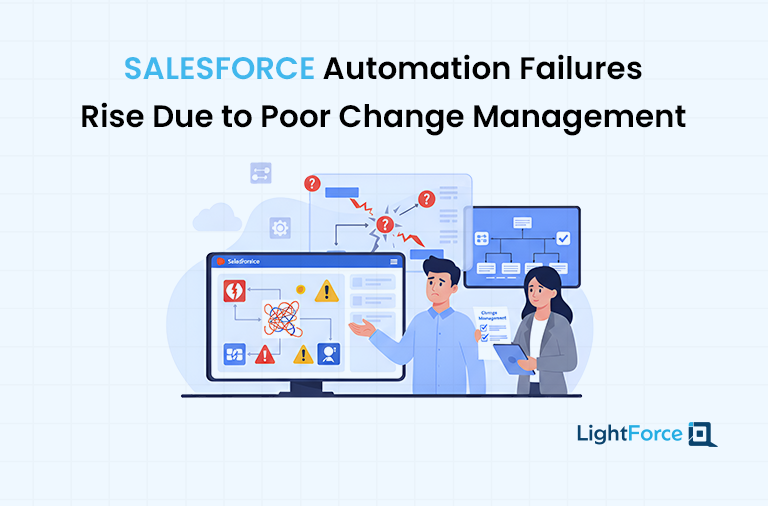
Salesforce orgs grow more complex, security experts are raising alarms over excessive user Salesforce teams are facing an increasing number of automation breakdowns—not because of platform limits, but due to rushed deployments and weak change governance.
Industry observers note a sharp rise in incidents where flows, triggers, and integrations behave unexpectedly after updates. In most cases, the root cause isn’t faulty logic—it’s insufficient testing, undocumented changes, and lack of deployment discipline.
What’s Going Wrong
As Salesforce orgs grow more automated, even small changes can have unintended consequences. Common issues include:
- Flows overriding each other after new releases
- Triggers firing in unexpected order
- Validation rules blocking automated processes
- Integrations failing due to untested field changes
These problems often surface only after reaching production, impacting end users and business operations.
Why Automation Is Becoming Fragile
Modern Salesforce environments are highly interconnected. A single field update can affect:
- Reports and dashboards
- Email alerts and approvals
- Third-party integrations
- Downstream analytics
Without a clear change strategy, automation becomes brittle—hard to maintain and risky to scale.
The Business Impact
Automation failures don’t just slow teams down. They can:
- Delay sales and service workflows
- Create data inconsistencies
- Reduce user trust in the CRM
- Increase support and rework costs
For organizations relying on Salesforce as a mission-critical system, these disruptions can quickly ripple across departments.
How Teams Can Reduce Risk
Salesforce leaders recommend:
- Mandatory sandbox testing for all automation changes
- Clear documentation of dependencies between flows and triggers
- Version control and release calendars
- Post-deployment monitoring and rollback plans
- Regular automation health reviews
Looking Ahead
As Salesforce continues to evolve with more low-code and AI-driven automation, disciplined change management will become essential. Teams that invest in structured deployment practices will gain stability, scalability, and long-term confidence in their automation strategy.